The Bloodline of Revival
From Halle to China
“But they that wait upon the LORD shall renew their strength…mount up with wings as eagles.”— Isaiah 40:31
Church history holds a lineage passed down not by blood but by prayer: August Hermann Francke (1663–1727) raised orphans in Halle by prayer alone; more than a hundred years later, a prodigal reborn in this very city went to Bristol to follow his example; three decades after that, this same faith entered inland China with the China Inland Mission. The source of that lineage is this city.
The Boy in the City of Schools
The story begins with a school. In the spring of 1695, Francke found four thalers and sixteen groschen in the parish poor-box and used it to start a school for the poor; three years later, the cornerstone of the orphanage building was laid. He had no money of his own, but he trusted firmly that God answers prayer — and gifts poured in from far and wide. By the time he died in 1727, this “city of schools” had more than two thousand students.
From 1710 to 1716, the young Zinzendorf studied at the noble academy here, and while a student formed the “Order of the Grain of Mustard Seed” with his classmates; he would later found the Moravian Church, the Herrnhut Brethren. A mustard seed was planted at a desk in Halle.
Wesley's Visit
In 1738, John Wesley came to Halle during his journey through Germany, walked into the orphanage, and asked to meet Francke's son. He wrote in his journal: “…admitted into the orphan-house, that amazing proof, that all things are still possible to him that believeth.”
From Halle to Zinzendorf and the Moravian Brethren, and on to Wesley, Methodism, and the evangelical Great Awakening — church history traces this line clearly.
Planted Across the Sea
The lineage flowed west as well. Henry Melchior Muhlenberg had been a teacher at the Halle orphanage; in 1741, urged on by Francke's son, he accepted a call and arrived in Philadelphia the following year. In 1748 he convened the first Lutheran synod in North America, and later generations would call him “the patriarch of American Lutheranism.” His motto was a line of Latin: Ecclesia plantanda — the church must be planted.
A Prodigal Reborn
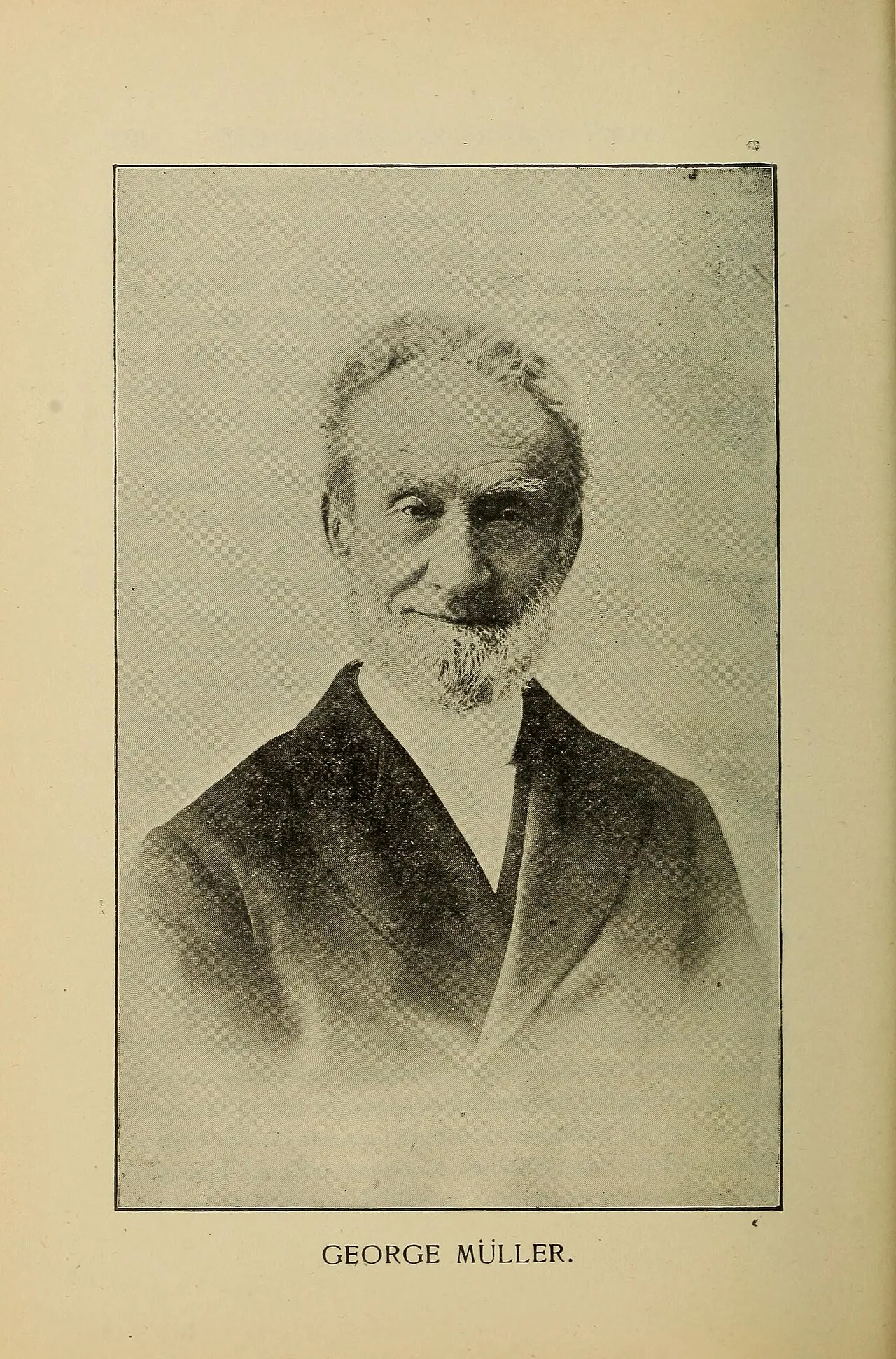
In mid-November 1825, at a Saturday-evening prayer meeting in the home of the Halle merchant Wagner, sat a theology student named George Müller (1805–1898). This Prussian prodigal later wrote of himself: “Until the beginning of November 1825, I had never heard the gospel preached.” It was at that very meeting that he was converted and born again.
He once lodged, free of charge, for about two months in rooms the orphanage kept for poor theology students; in 1835 he read a biography of Francke and was deeply moved. Beginning the following year, he ran orphanages in Bristol, England, by prayer alone and without soliciting funds, caring for tens of thousands of orphans over his lifetime — and he openly acknowledged that it was Francke's example he was following.
Faith Enters China
In 1865, Hudson Taylor founded the China Inland Mission, and through it the gospel penetrated deep into China's interior. His “faith principle” — never soliciting funds, relying on prayer alone for provision — explicitly followed Müller's example; and Müller himself was one of the Mission's chief early supporters, a living model of that same principle.
The lineage is now unbroken: Francke ran an orphanage in Halle by prayer; Müller was born again in Halle and followed Francke's example; Taylor followed Müller's example and carried that faith into inland China. As for Karl Gützlaff, called “the grandfather of the China Inland Mission,” he came out of a mission school in Berlin — Berlin Pietism descended from Halle, but he himself was not a Halle man — only a side branch of this lineage.
Three Centuries of Concern
Turn the calendar back further. In 1697, Leibniz published Novissima Sinica (News from China), and in its preface called on Protestants to send missions to China; he sent the book to Francke for his opinion, and the two corresponded from then until 1716. Among the holdings of the orphanage's Cabinet of Art and Natural Curiosities, a small Chinese shoe survives to this day. Halle's concern for China began more than three hundred years ago.
Halle itself never sent a missionary directly to China; this concern was always a matter of the heart, never a commission. But the lineage handed down through prayer walked the road this city never took — by way of Bristol, into inland China. Three centuries later, a company of Chinese Christians came to Halle, and in this city they worship, in Chinese, that same God.
People in this line
Sources