Halle and Faith
City of Books and Missions
“Behold, I have set before thee an open door, and no man can shut it.”
— Revelation 3:8
Halle is more than the city of salt and Handel's birthplace. The first organized Protestant overseas mission in history, the world's earliest Bible society, the first Protestant missions periodical, the world's first chair in Protestant missiology — every one of these “firsts” belongs to this city on the Saale. Luther preached here. Francke built an orphanage here on prayer alone. Müller was born again here. Books and the gospel travelled from Halle to India and to North America, and a lineage of faith wound its way on into China. Nine hundred years unfold in this city, and our fellowship stands on the line that extends from it.
Nine Hundred Years
- 1116
The Founding of Neuwerk Priory
The Archbishop of Magdeburg founded Neuwerk Priory; Augustinian canons prayed and taught here, making it the spiritual center of medieval Halle. The priory was dissolved long ago, but recent archaeology has brought its walls and more than a hundred medieval graves back to light.
- 1517
Indulgences and the Relic Collection
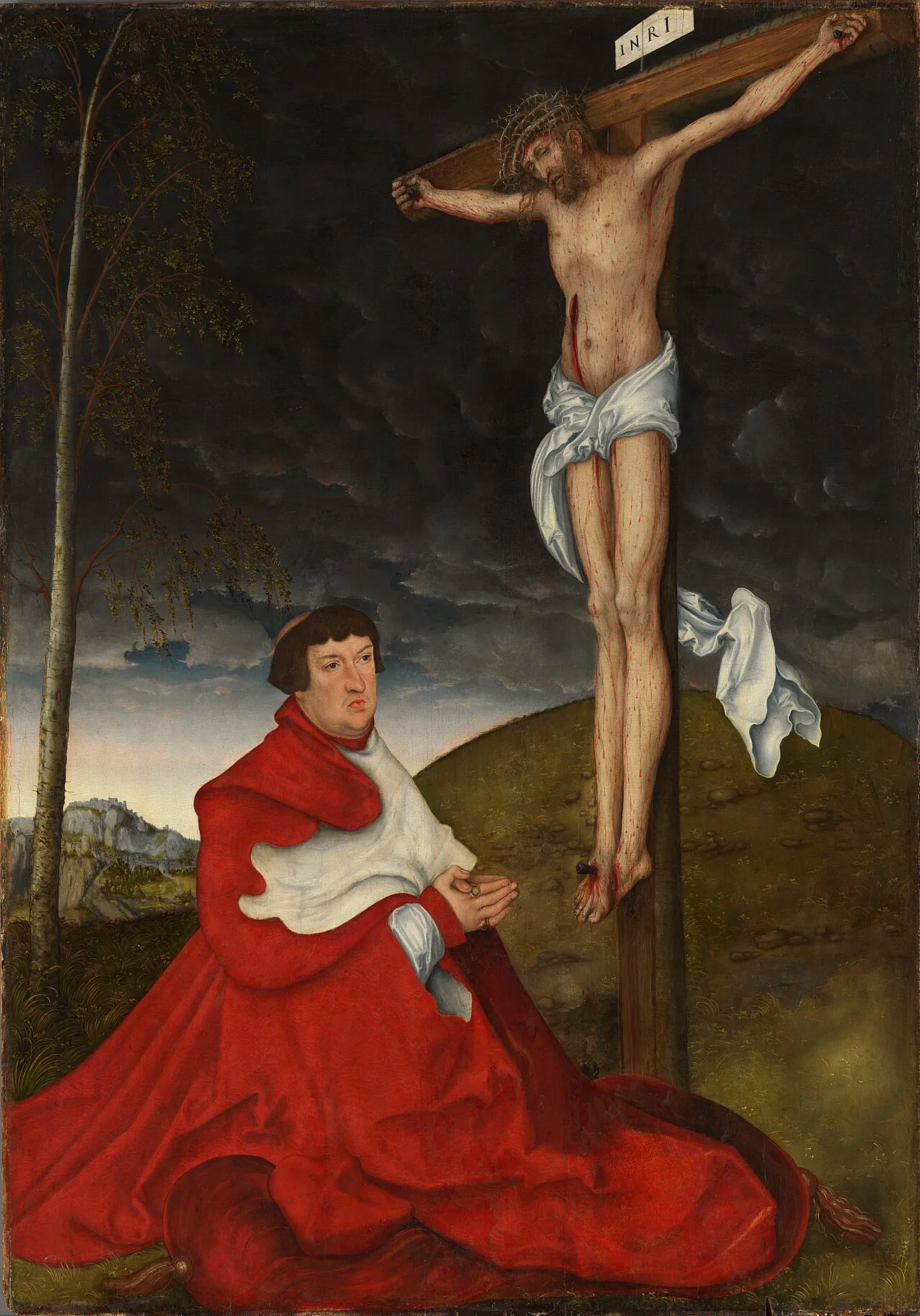
Cardinal Albrecht of Brandenburg, based at Moritzburg, had amassed a relic collection of more than eight thousand pieces and appointed Tetzel as his general agent for indulgences; that same year, the instruction manual for the indulgence sale reached Luther's hands — the fuse for the Ninety-Five Theses was laid right here in Halle.
public domain - 1541
A Protestant Sermon on Good Friday
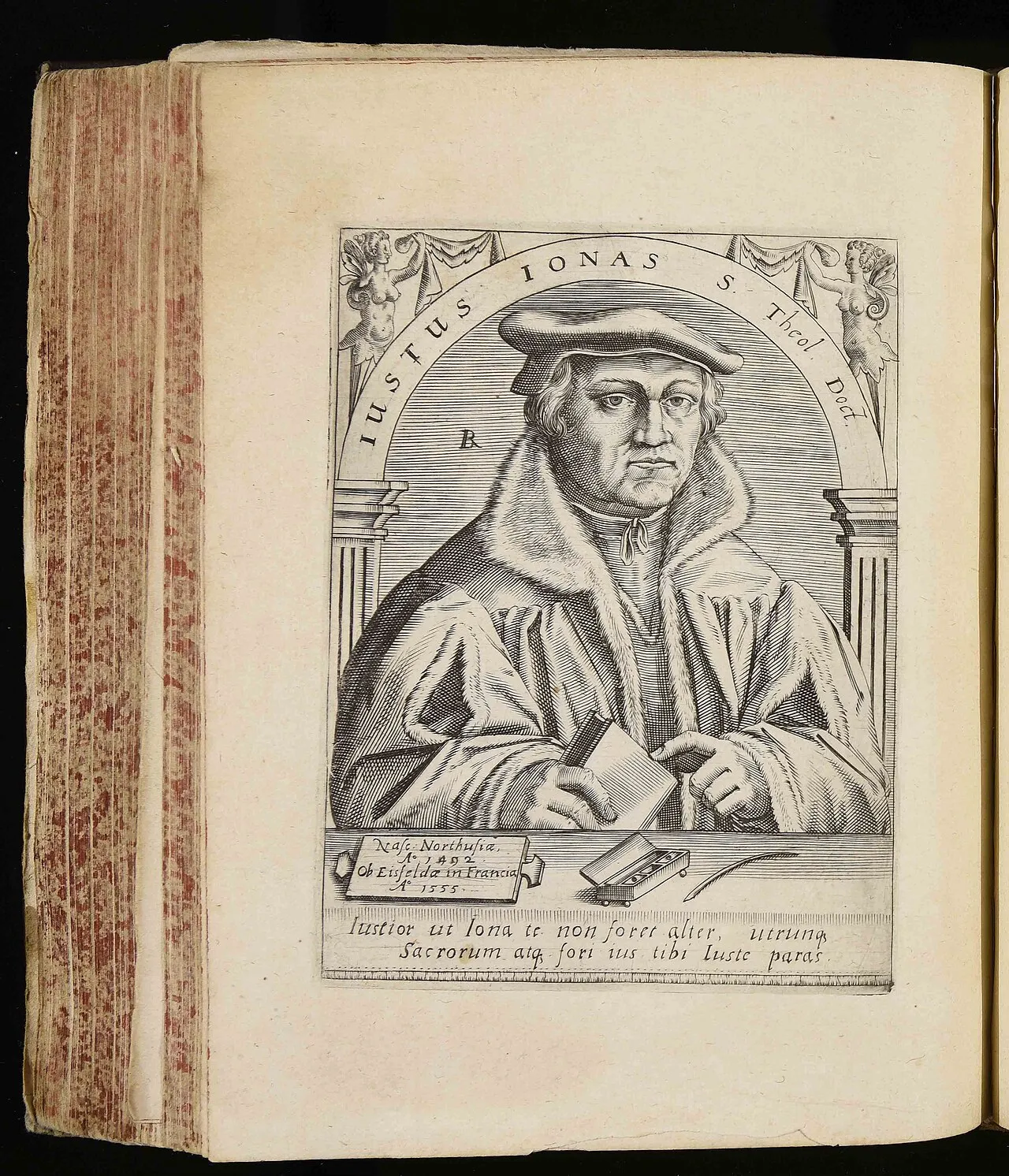
Justus Jonas came from Wittenberg under orders and preached the first Protestant sermon in the Marktkirche on Good Friday; that same year, Albrecht of Brandenburg withdrew to Aschaffenburg with his relics and his art collection, leaving the city for good.
public domain - 1546
Luther's Last Footsteps
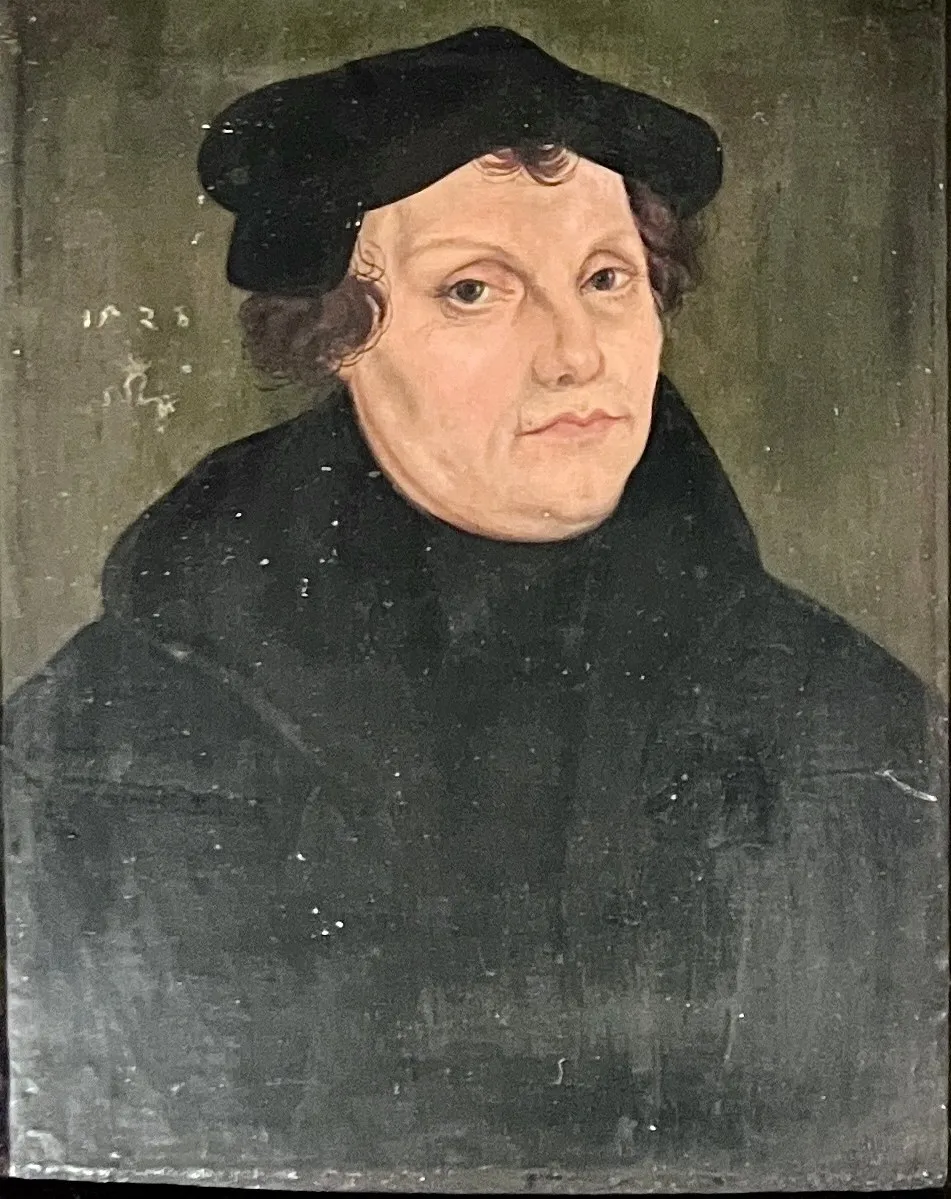
On his way to Eisleben, the Saale rose in a spring flood of melting ice and blocked Luther's path; he was stranded in Halle, stayed with his close friend Jonas, and preached there. He died a few weeks later, and on the journey home for burial, his coffin lay overnight once more in the Marktkirche.
public domain - 1552
The Marienbibliothek
The Marktkirche's first pastor used donated funds to buy books at the Leipzig book fair, founding what would become the oldest continuously open Protestant church library of its kind in Germany; a first edition of Luther's 1534 Bible still sits on its shelves today.
public domain - 1554
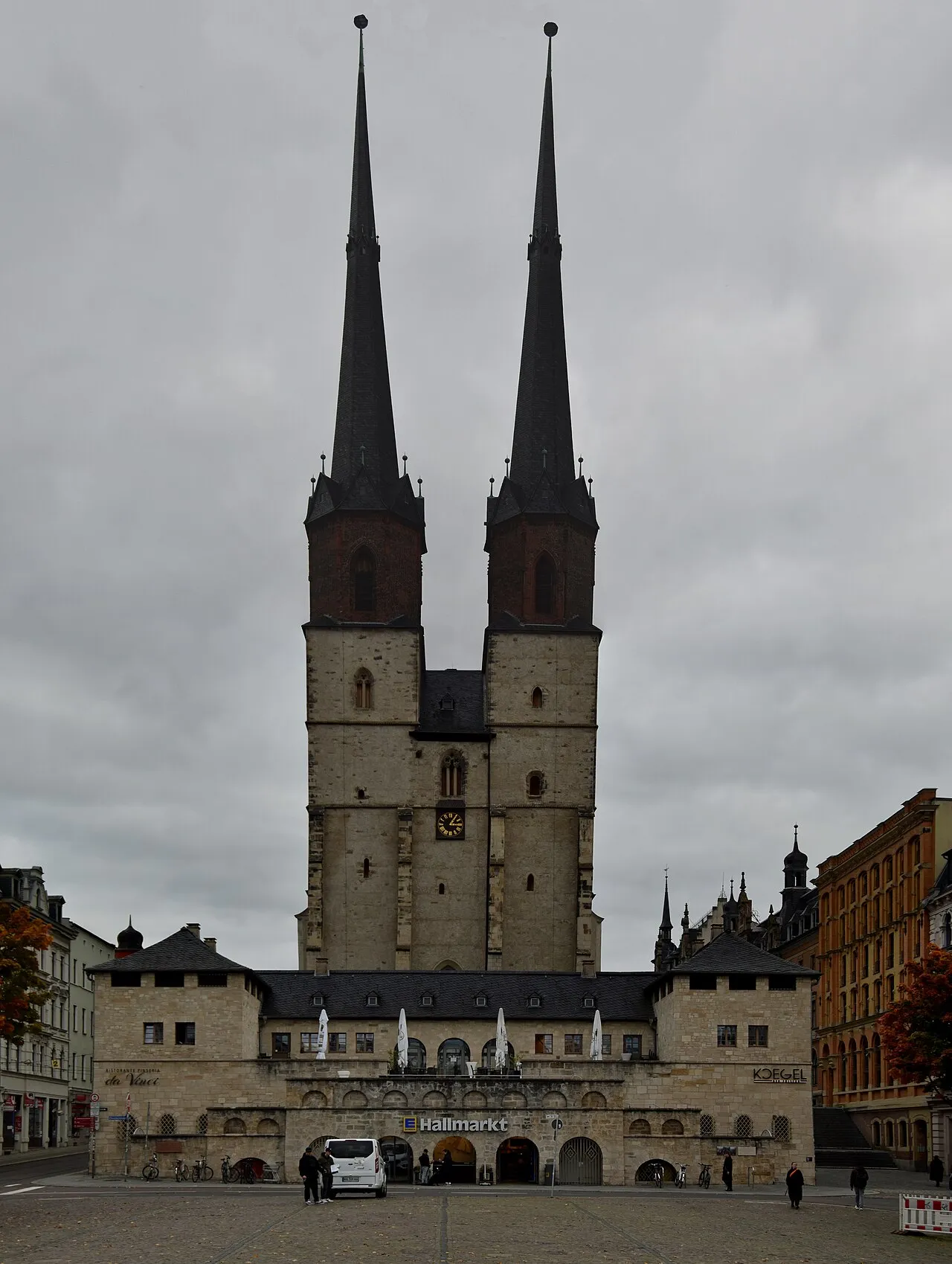
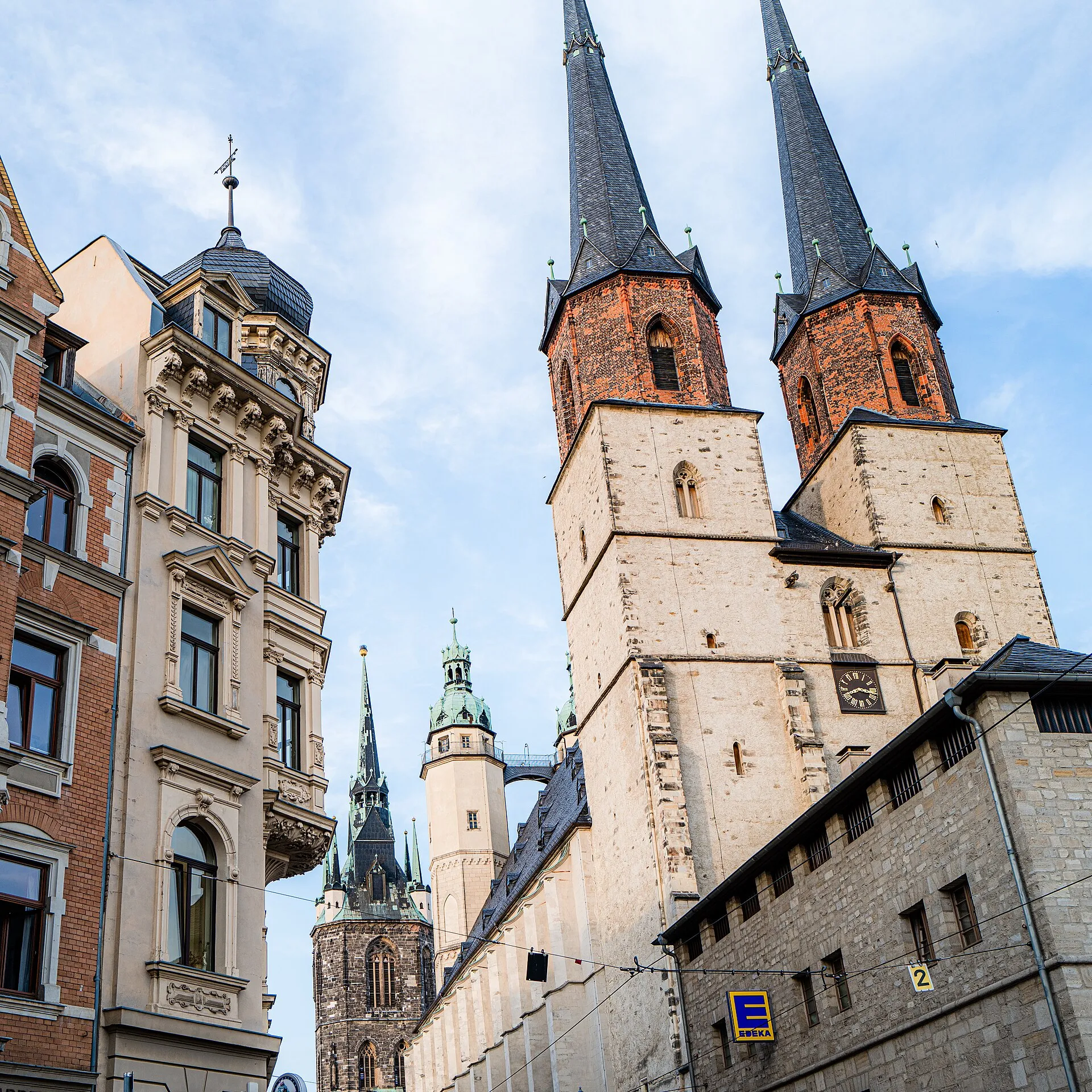
The Marktkirche Is Completed
The great church that Albrecht of Brandenburg commissioned to hold back the Reformation was only half built when Halle changed sides; by the time it was finished, it was a Protestant church. Together with the Red Tower, this gave Halle its name: the City of Five Towers.
Tdn70 · CC BY 4.0 - 1624
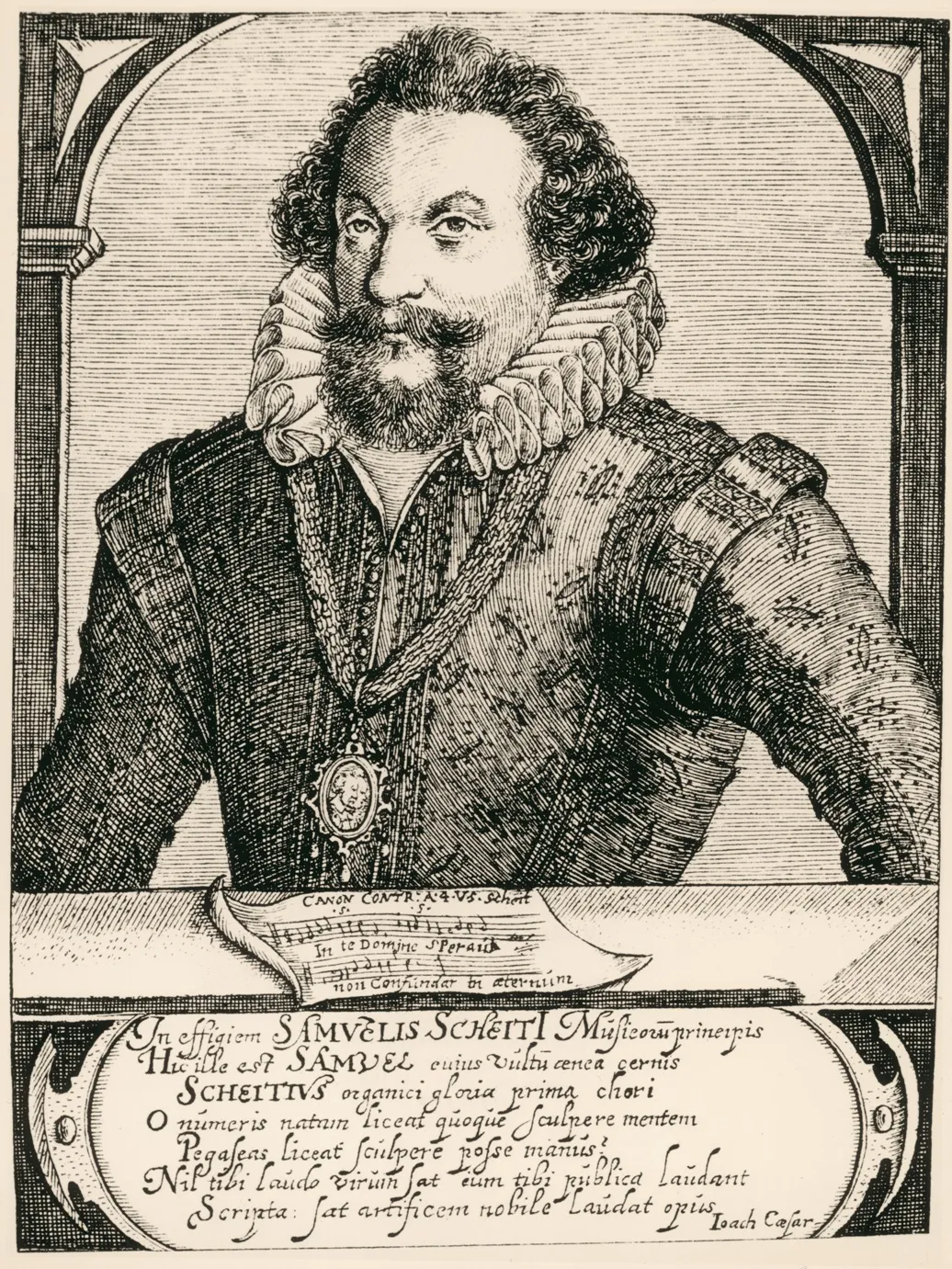
Scheidt's Tabulatura Nova
Samuel Scheidt, born and buried in Halle, published his Tabulatura Nova, a landmark in the history of organ music; a century before Handel, he was already writing this city's own church music.
public domain - 1685
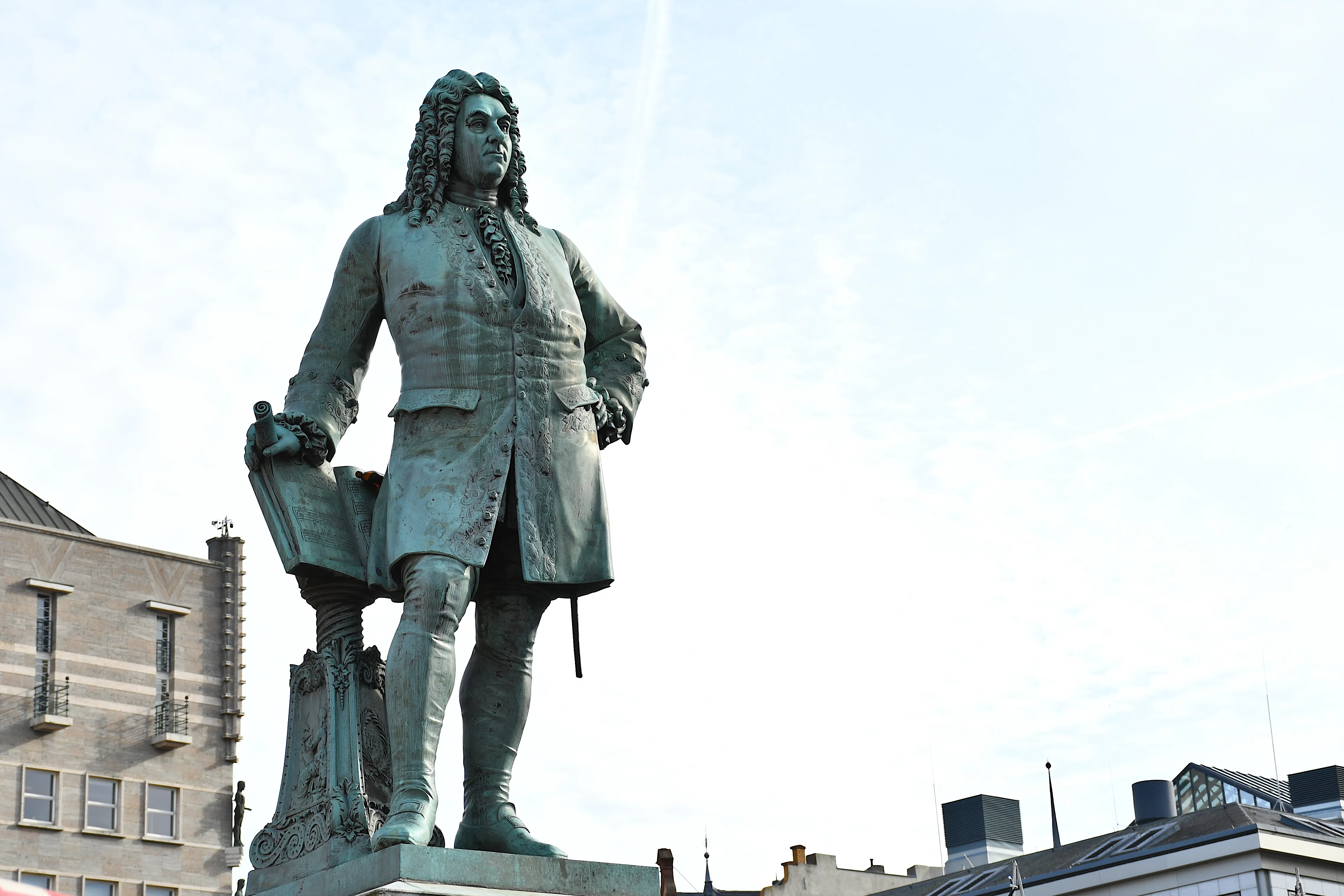
Handel's Baptism
Handel was born in Halle and baptized the next day in the Marktkirche; he studied keyboard under Zachow and, at seventeen, was appointed organist of the cathedral. Years later, the “Hallelujah” from his Messiah would carry this city's name around the world.
public domain - 1694
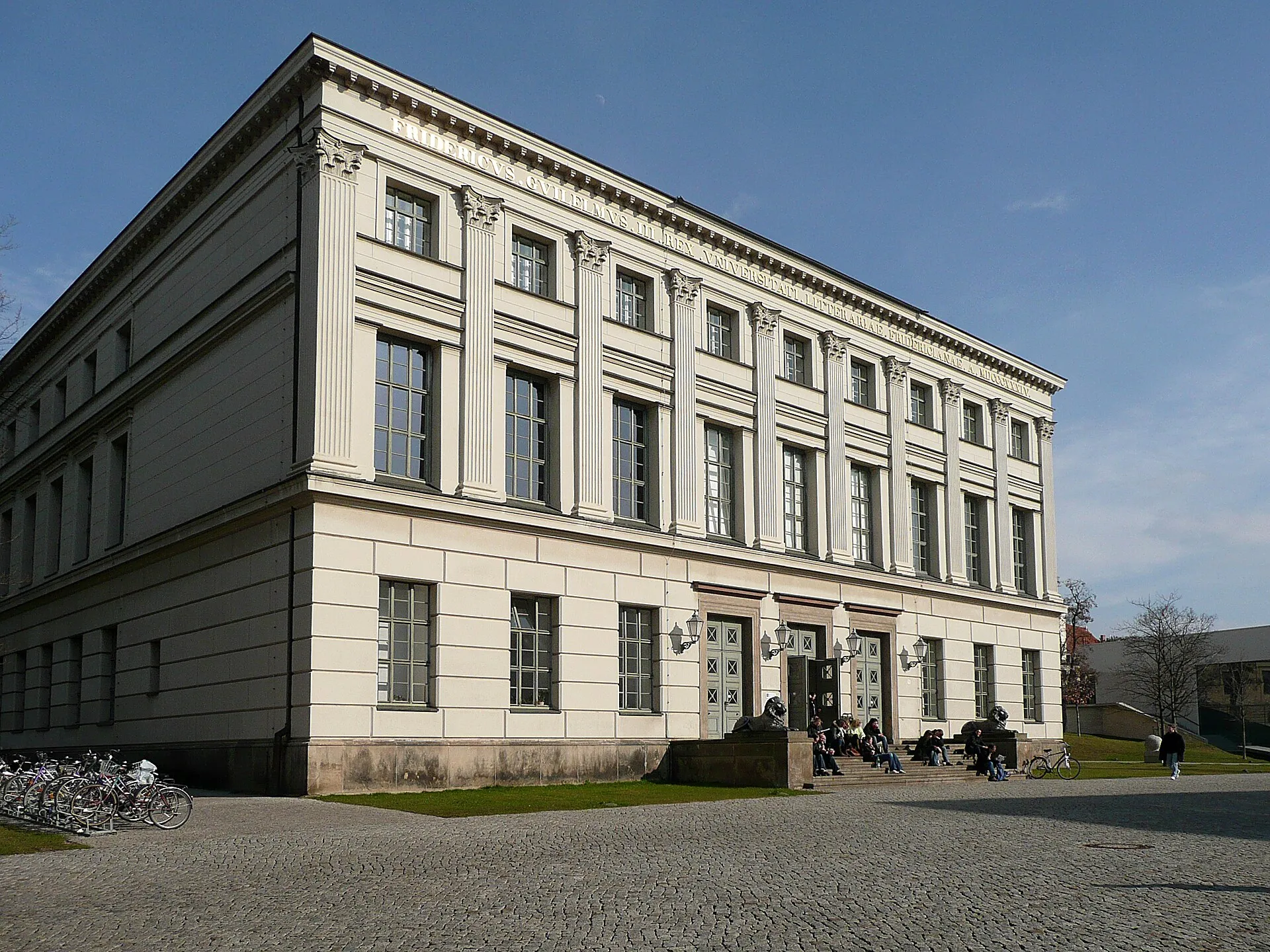
The Founding of the University of Halle
The Elector founded the University of Halle; from the start, Pietists led its theology faculty, which grew into the largest of its kind in Germany at the time. About six thousand future ministers trained here, and at least sixty students went on from Halle into overseas mission.
Heinrich Stürzl · CC BY-SA 4.0 - 1695
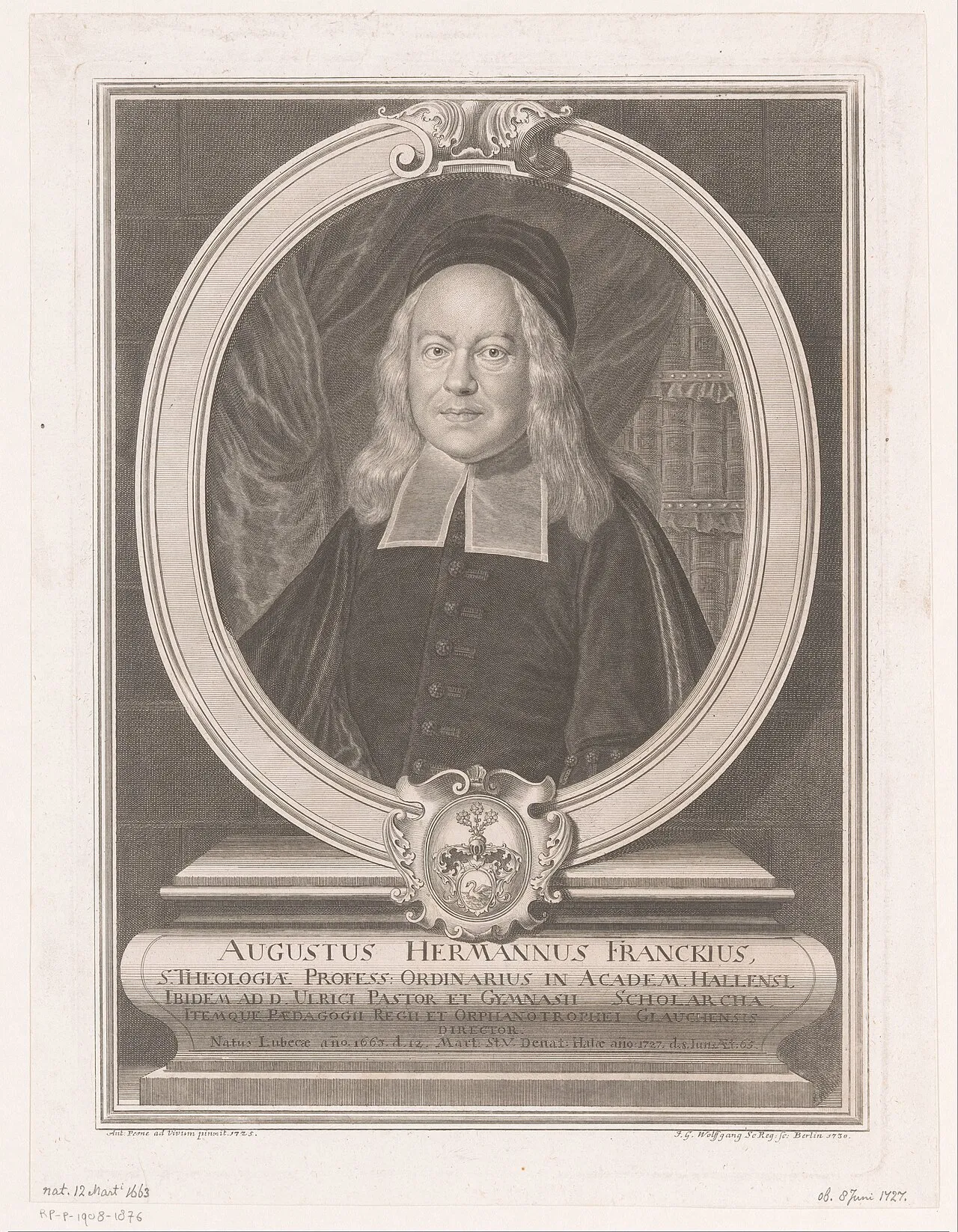
Four Thalers and Sixteen Groschen
Francke found four thalers and sixteen groschen in the parish poor box and used it to start a school for the poor; he had no money of his own, only a deep conviction that God answers prayer — and this small offering became the first brick of a school city.
public domain - 1698
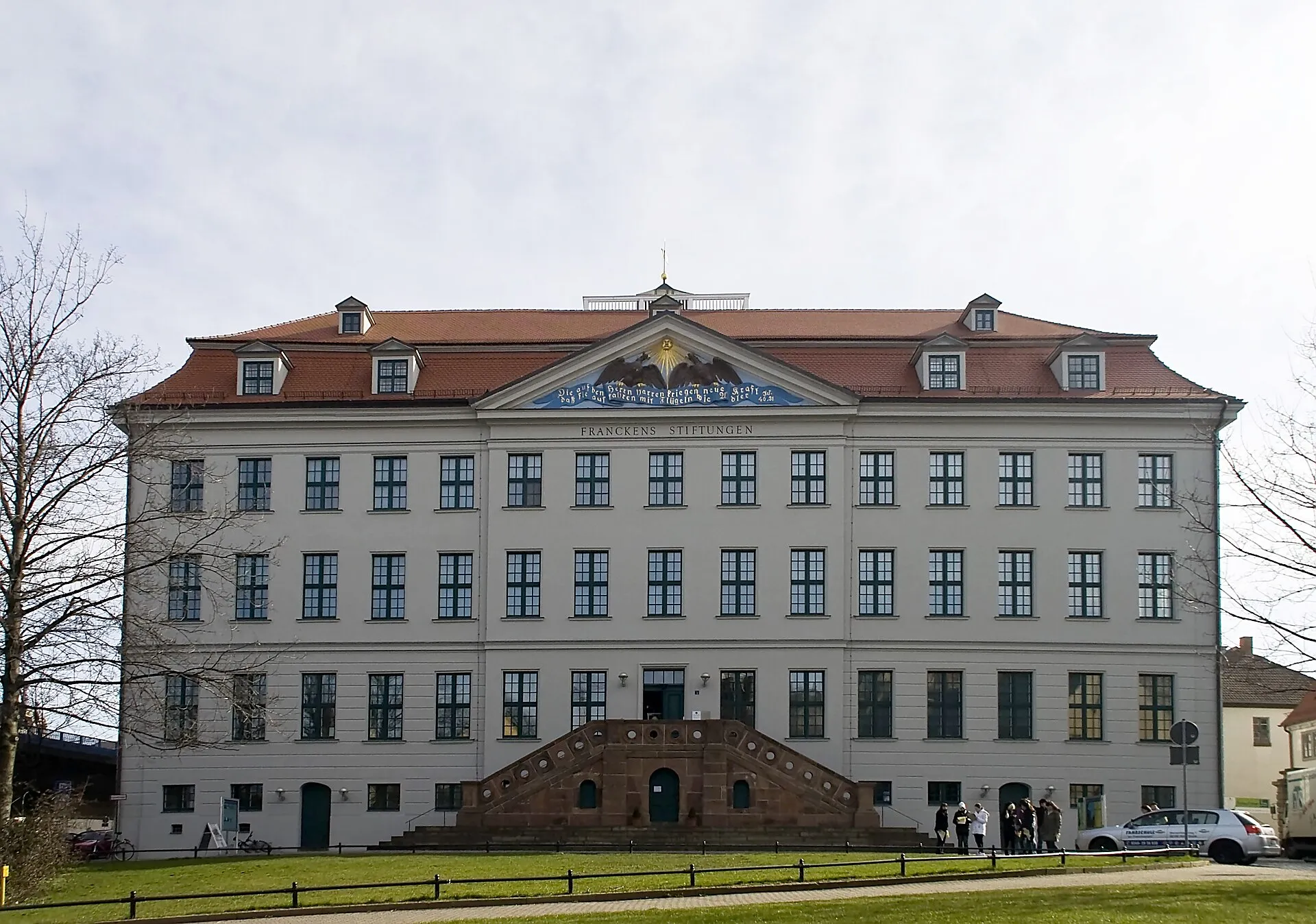
The Orphanage's Cornerstone
The cornerstone of the orphanage building was laid; on its gable, two eagles rise toward the sun, and a scroll carved beneath them bears the promise of Isaiah: “But they that wait upon the LORD shall renew their strength.” By the time Francke died, this school city numbered about three thousand people.
Timo Pilgram · CC BY-SA 3.0 DE - 1704
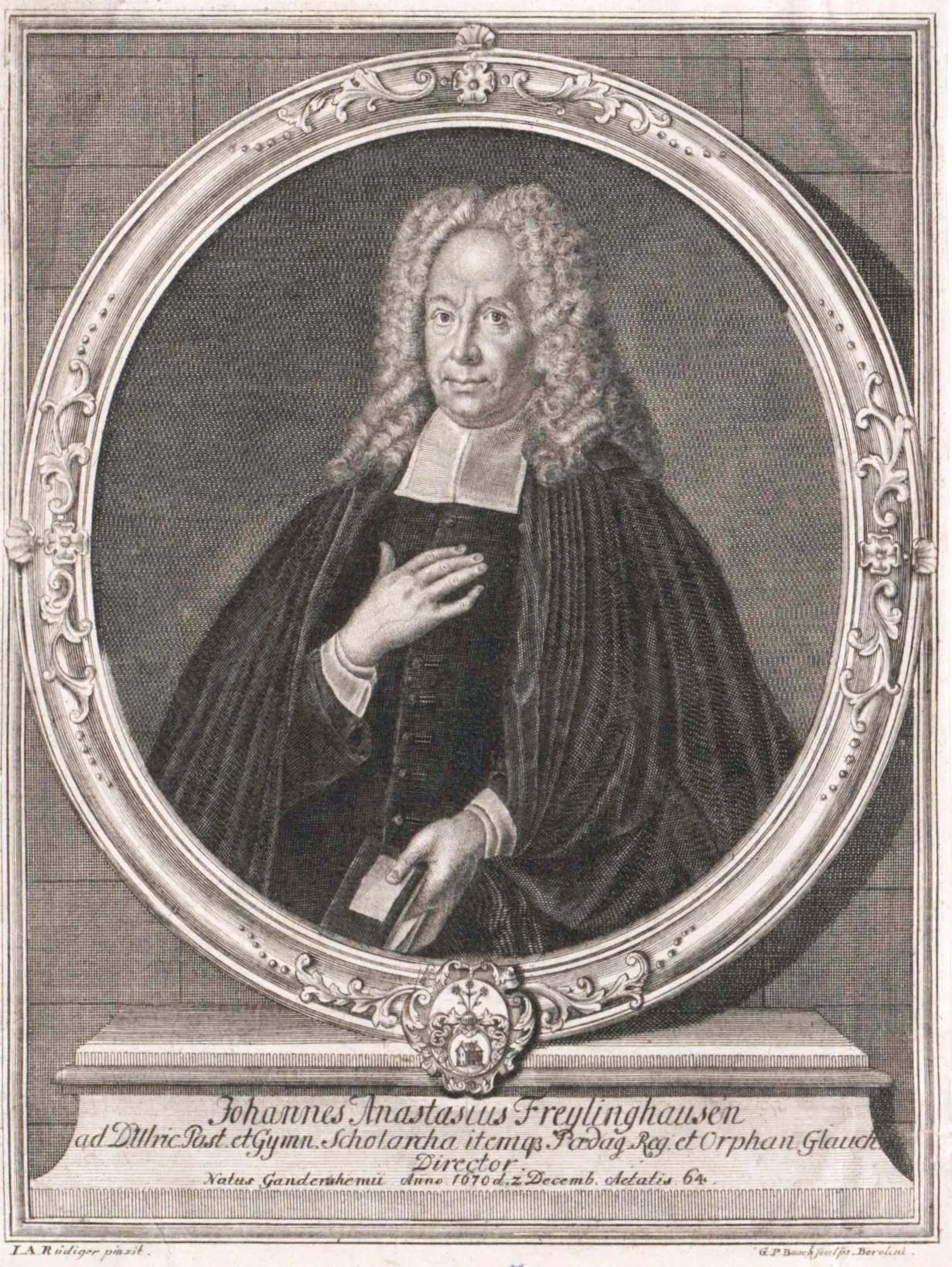
Geistreiches Gesangbuch
Freylinghausen compiled his Geistreiches Gesangbuch in Halle, gathering 683 hymns and 173 tunes — Pietism's most important hymnal. From then on, this movement of the heart had its own songs.
public domain - 1706
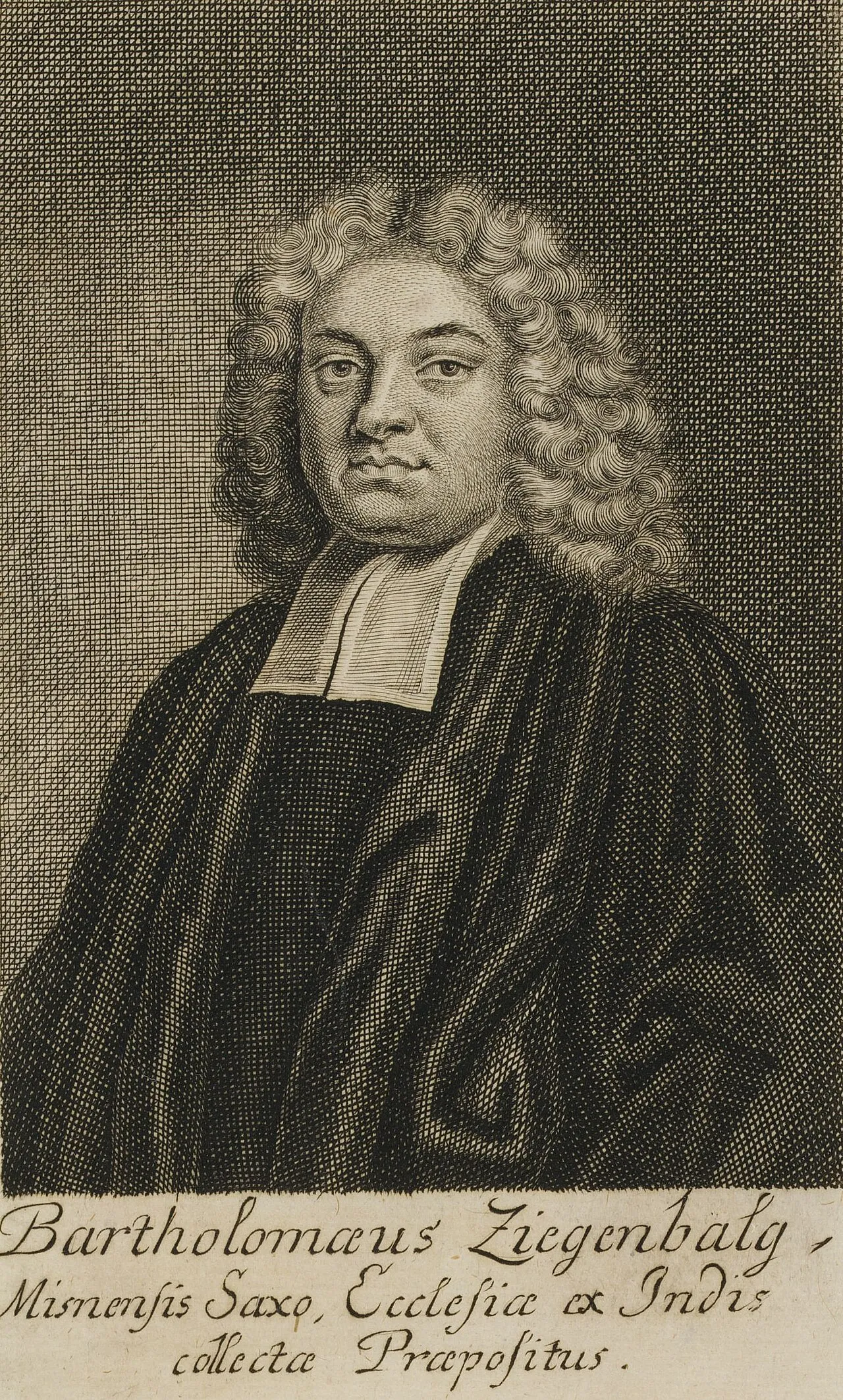
The First Mission Sets Sail
King Frederik IV of Denmark called for missionaries, but no one at home volunteered; the recruit came instead from Francke's circle. Ziegenbalg arrived in Tranquebar, India, and the first organized Protestant overseas mission in history was underway.
public domain - 1710
A Bible Society and a Missions Periodical
Canstein and Francke founded the world's earliest Bible society; standing type that was never broken down kept printing costs low enough that the poor could afford a Bible. That same year, the Hallesche Berichte began publication — the first Protestant missions periodical in history.
- 1715
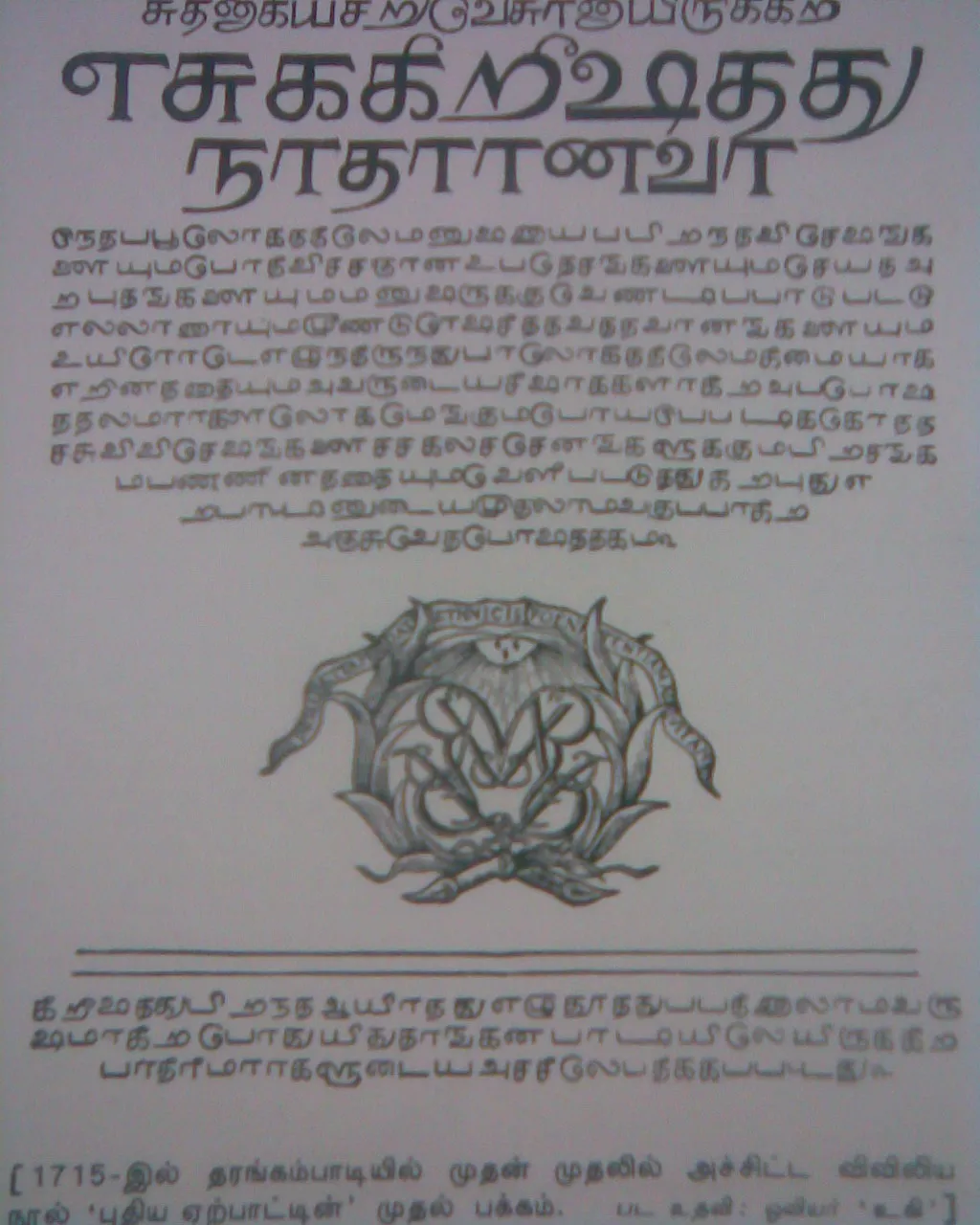
The Tamil New Testament Is Printed
Ziegenbalg's Tamil translation of the New Testament went to press — the first complete printed New Testament in an Indian language; Tamil thereby became the first Indian language ever set in movable type.
public domain - 1738
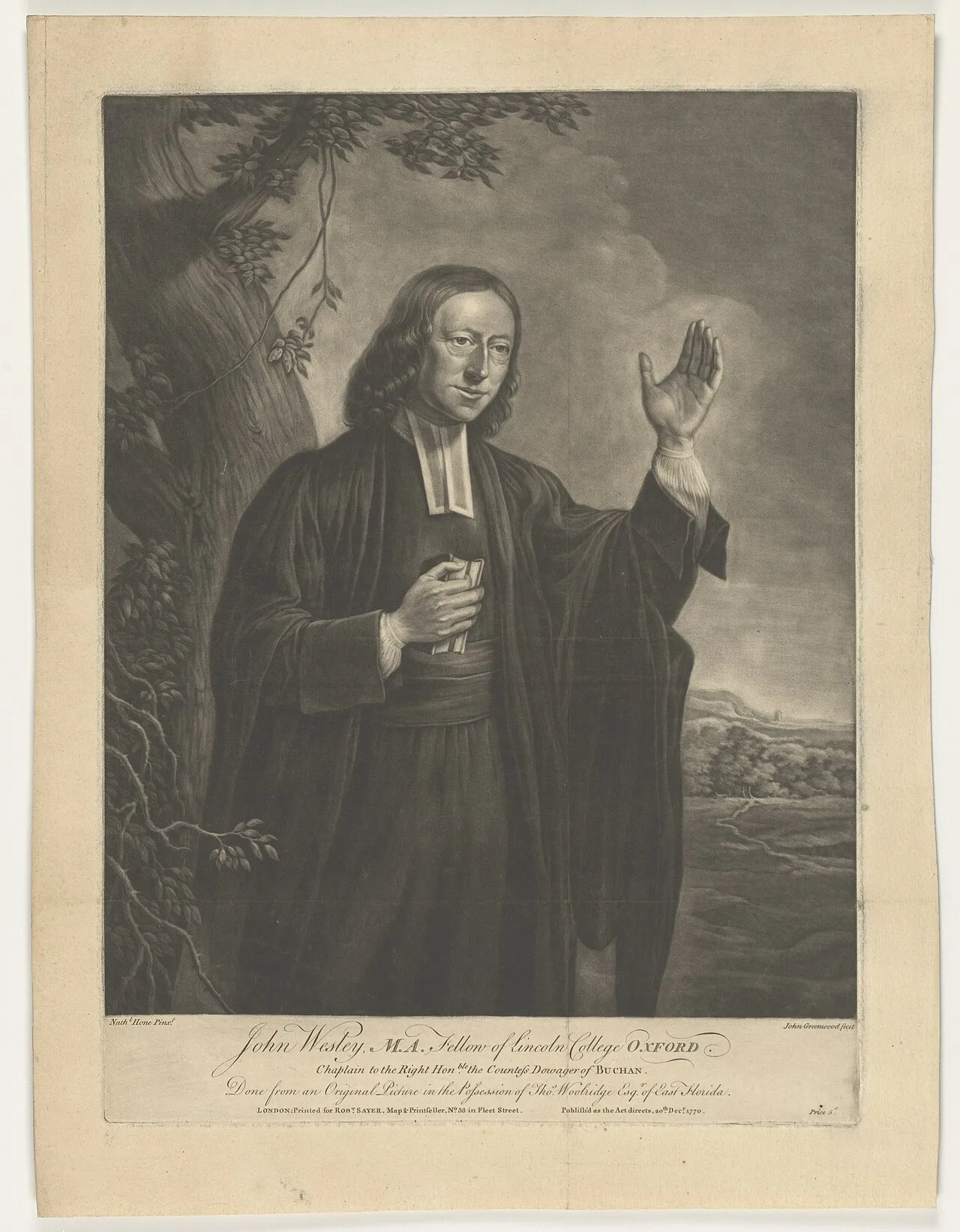
Wesley Visits the Orphanage
During his journey through Germany, Wesley visited Francke's orphanage in person and wrote in his journal: “…that amazing proof, that all things are still possible to him that believeth.” That spark would later kindle Methodism and the Great Awakening.
public domain - 1742
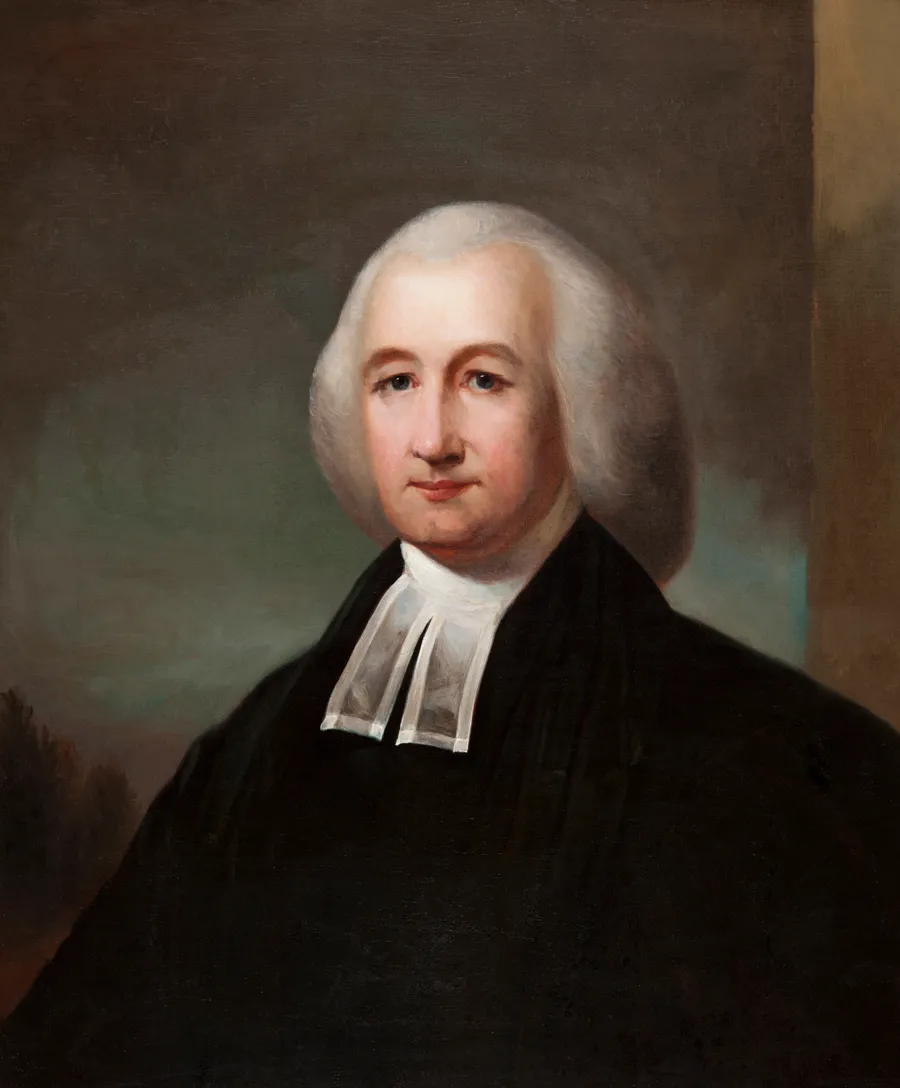
Muhlenberg Sails for America
Muhlenberg, a teacher at the orphanage, crossed the Atlantic to Philadelphia; six years later he founded the first Lutheran ministerium in North America and became known as “the patriarch of American Lutheranism.” Halle's classrooms reached all the way to the churches of the New World.
public domain - 1825
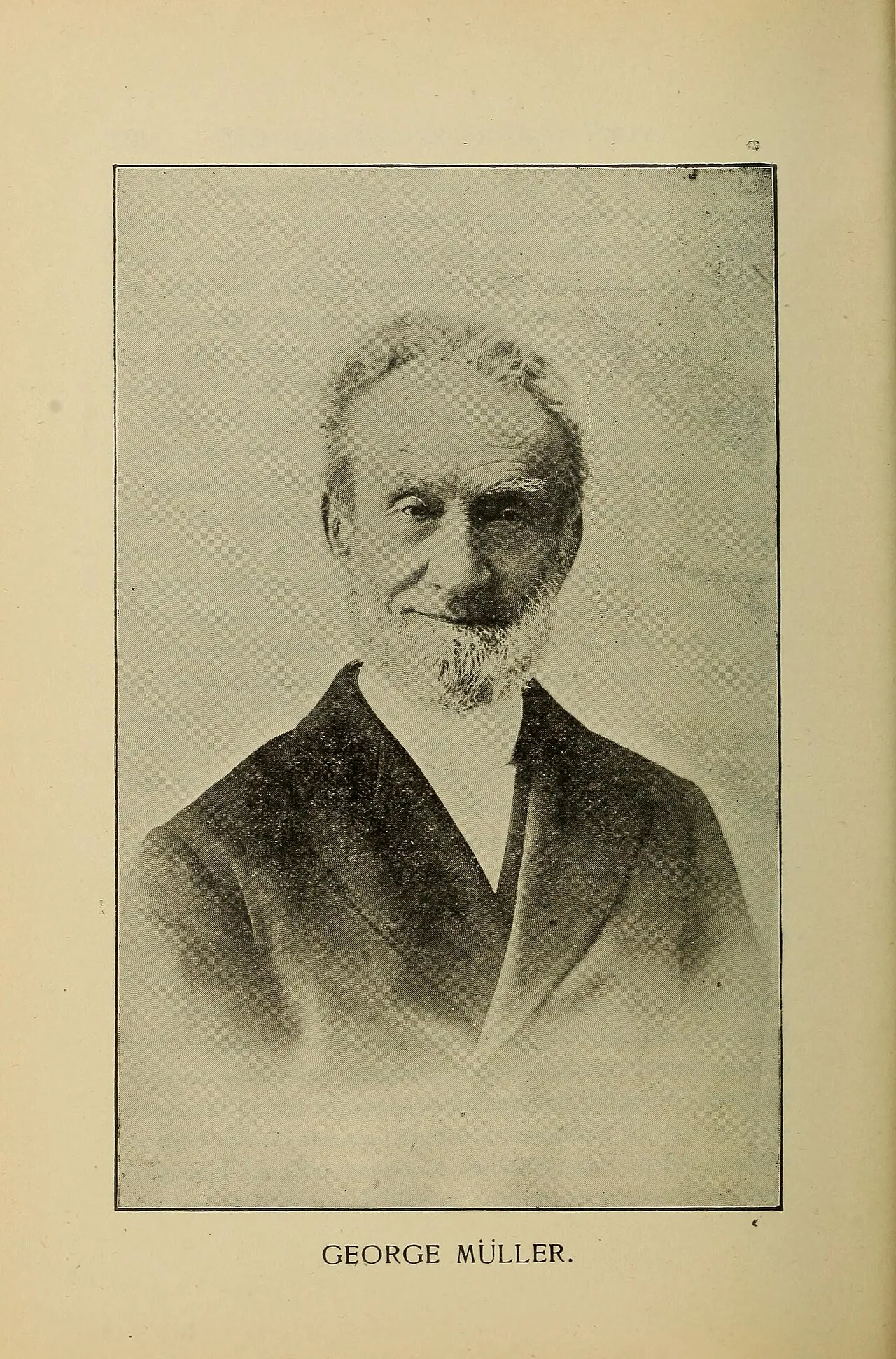
Müller Is Born Again in Halle
Müller, a theology student at the University of Halle, repented and was born again at a home prayer meeting in the city; years later in Bristol, relying on prayer alone and never soliciting funds, he cared for tens of thousands of orphans — and openly credited Halle's Francke as his model.
public domain - 1865
A Lineage of Faith Reaches China
Hudson Taylor founded the China Inland Mission; its “faith principle” explicitly followed Müller's example, and Müller himself was one of the mission's leading early supporters. Francke, Müller, Taylor — this is how a lineage of faith flowed into China.
- 1896
The First Chair in Missiology
Warneck became professor of missiology at the University of Halle — the world's first Protestant chair in that field — and came to be called “the father of Protestant missiology.” A hundred and ninety years after mission first set out from Halle, it became a discipline here too.
- 1937
The Confessing Synod in Halle
The second session of the Confessing Church's Fourth National Confessing Synod met in Halle and adopted its declaration on the Lord's Supper; Halle's superintendent was banned from preaching and repeatedly arrested. Under pressure, the church still spoke its confession aloud.
- 1989
A Night of Prayer for Peace
On the night of 9 October, the prayer for peace at the Marktkirche and the gathering that followed in the square were cleared with batons and police dogs; 41 people were arrested. Unlike Leipzig that same night, Halle paid in blood. A month later, the Wall fell.
Reimund Schmidt-De Caluwe · CC BY-SA 4.0 - Today
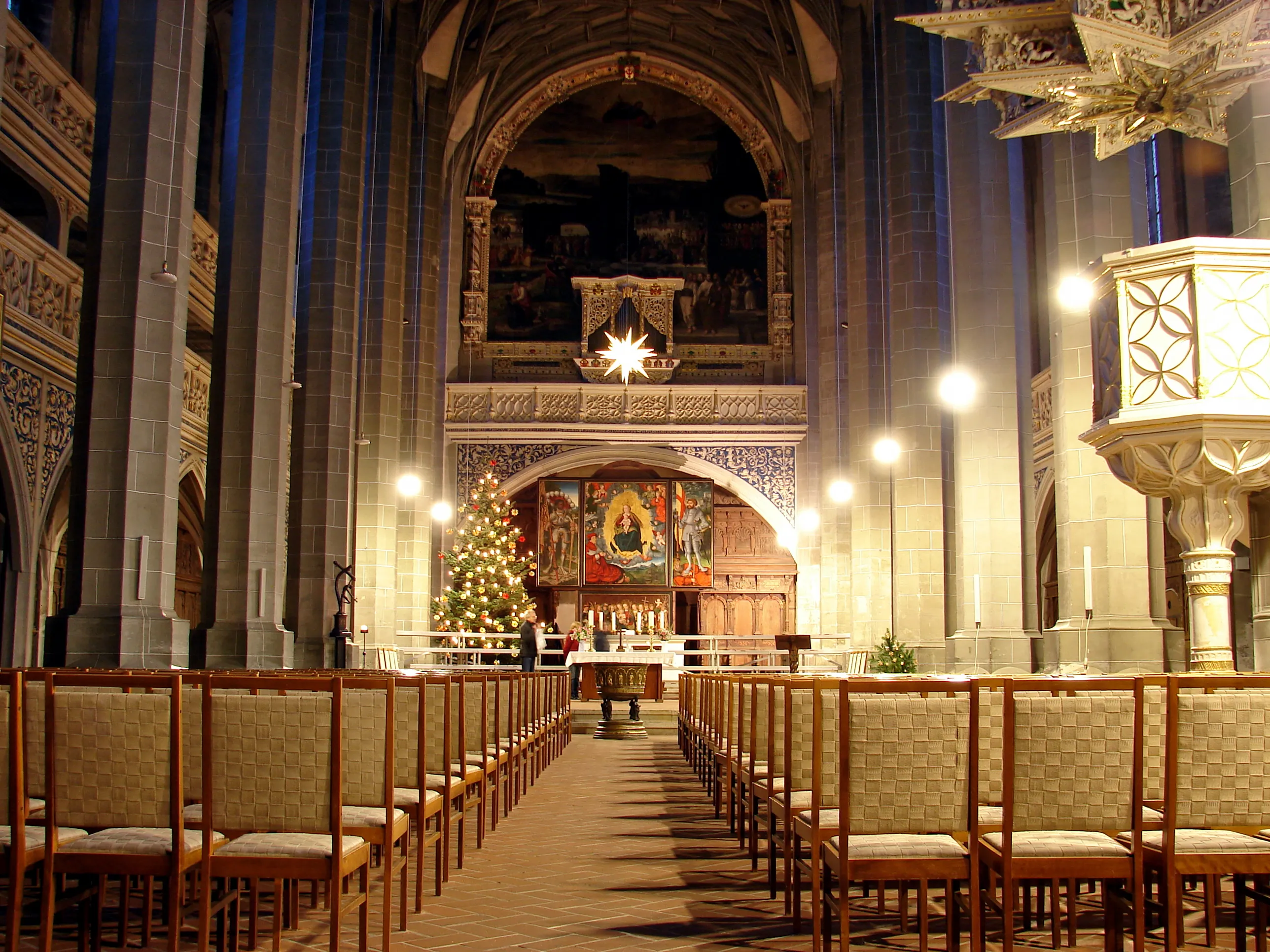
We Are in This City
A group of Chinese Christians gathers in this city, reading the same Bible in Chinese and worshiping the same God; the nine-hundred-year story is not finished, and that open door stands open to us too, today.
H.Helmlechner · CC BY-SA 4.0
Eight Stories in Depth
Beyond the timeline, eight threads run on — from the storm of the Reformation to witness under persecution.
The Other Side of the Storm
The indulgence machine was set up in Halle, and the fuse for the Ninety-Five Theses was lit here; twenty-four years later, the city itself changed sides.
Read on
City of Pietism
Spener made it possible from behind the scenes; Francke carried the movement to its height — from four thalers and sixteen groschen to a school city of three thousand.
Read on
City of Books and Scripture
From the Marienbibliothek to the Cansteinsche Bibelanstalt: the world's earliest Bible society was born here, putting Scripture within reach of the poor.
Read on
Where Mission Began
The first organized Protestant overseas mission in history drew both its recruit and its theology from Halle; for nearly a hundred and fifty years afterward, missionaries kept setting out from here.
Read on
From Halle to China
Francke's prayers, Müller's new birth, Hudson Taylor's China Inland Mission — a single lineage of faith wound its way into China.
Read on
City of Church Music
From Scheidt to Handel, to Bach testing the organ; the Red Tower's carillon still rings out the melody of Messiah on the hour.
Read on
The Pendulum of Theology
A university swinging back and forth between pietism and rationalism; Schleiermacher, Tholuck, and Aland all once taught in Halle.
Read on
Witness Under Persecution
From the Confessing Synod of 1937 to the night of prayer for peace in 1989 — under two regimes, Halle's church paid a price.
Read on
People and Landmarks
Cardinals and reformers, organists and missionaries, a library and an orphanage — nine centuries of names and places, all bound to this city.
- Martin LutherMartin Luther1483–1546
- Albrecht von BrandenburgAlbrecht von Brandenburg1490–1545
- Justus JonasJustus Jonas1493–1555
- Marktkirche Unser Lieben FrauenMarktkirche Unser Lieben Frauen1554
- MarienbibliothekMarienbibliothek1552
- Philipp Jakob SpenerPhilipp Jakob Spener1635–1705
- August Hermann FranckeAugust Hermann Francke1663–1727
- Francke FoundationsFranckesche Stiftungen1698
- CansteinCarl Hildebrand von Canstein1667–1719
- FreylinghausenJohann Anastasius Freylinghausen1670–1739
- Bartholomäus ZiegenbalgBartholomäus Ziegenbalg1682–1719
- Christian Friedrich SchwartzChristian Friedrich Schwartz1726–1798
- Nikolaus Ludwig von ZinzendorfNikolaus Ludwig von Zinzendorf1700–1760
- John Wesley and HalleJohn Wesley1703–1791
- Henry Melchior MuhlenbergHenry Melchior Muhlenberg1711–1787
- George MüllerGeorge Müller1805–1898
- Gustav WarneckGustav Warneck1834–1910
- Samuel ScheidtSamuel Scheidt1587–1654
- Handel and HalleGeorg Friedrich Händel1685–1759
- The Bachs and HalleWilhelm Friedemann Bach1710–1784
- August TholuckAugust Tholuck1799–1877
- Schleiermacher and HalleFriedrich Schleiermacher1768–1834
- Kurt AlandKurt Aland1915–1994