City of Books and Bibles
From the first books bought with donations to more than 2.7 million Bibles
“What good does it do those who read the Scriptures, if they do not know the Spirit who inspired them?”— Jacob Boehme (translated)
Half of Halle's history of faith is written on paper. In 1552, a pastor used donated funds to buy the city's first books at the Leipzig book fair; in 1710, a Bible institute brought the price of a Bible within reach of the poor; in 1715, the first complete printed New Testament in an Indian language came from the hand of a missionary Halle had sent out. Halle, the salt city, is also a city of books and Bibles.
The Pastor's Book Chest
In 1552, Sebastian Boetius (1515–1573), the Marktkirche's first pastor, used congregational donations to buy the city's first books at the Leipzig book fair. As a young man in Wittenberg he had studied directly under Luther and Melanchthon; he later succeeded Justus Jonas as pastor of the city. Those books became the founding collection of the Marienbibliothek — the oldest Protestant church library of its kind in Germany still continuously open to the public.
Before the university library was founded in 1696, it was the city's only public scholarly collection. Today, among its more than 30,000 volumes are several hundred incunabula and a first edition of Luther's 1534 Bible.
Standing Type
The price of a Bible had long kept it out of poor people's hands. In 1710, Baron von Canstein and August Hermann Francke (1663–1727) founded the Cansteinsche Bibelanstalt in Halle; the first Canstein Bible came off the press on 21 October that year. Their method was standing type: once set, the type was never broken down. About 5 million pieces of type stood ready year-round, so Bibles could be printed on demand, and the cost fell again and again until a Bible was finally something the poor could afford.
In Canstein's own lifetime, the institute printed about 100,000 New Testaments and 40,000 complete Bibles; by 1800, the total had passed 2.7 million. This was the world's earliest Bible society, founded 94 years before the British and Foreign Bible Society.
Ink from the Orphanage
That same year, 1710, Francke had another kind of page printed at the orphanage: the Halle Reports — the mission's newsletter, and history's first Protestant missionary periodical. News from far away became type on a regular schedule; the pages that went out from this school-city carried both the word of God and word of what God was doing in distant places.
Type Crosses the Sea
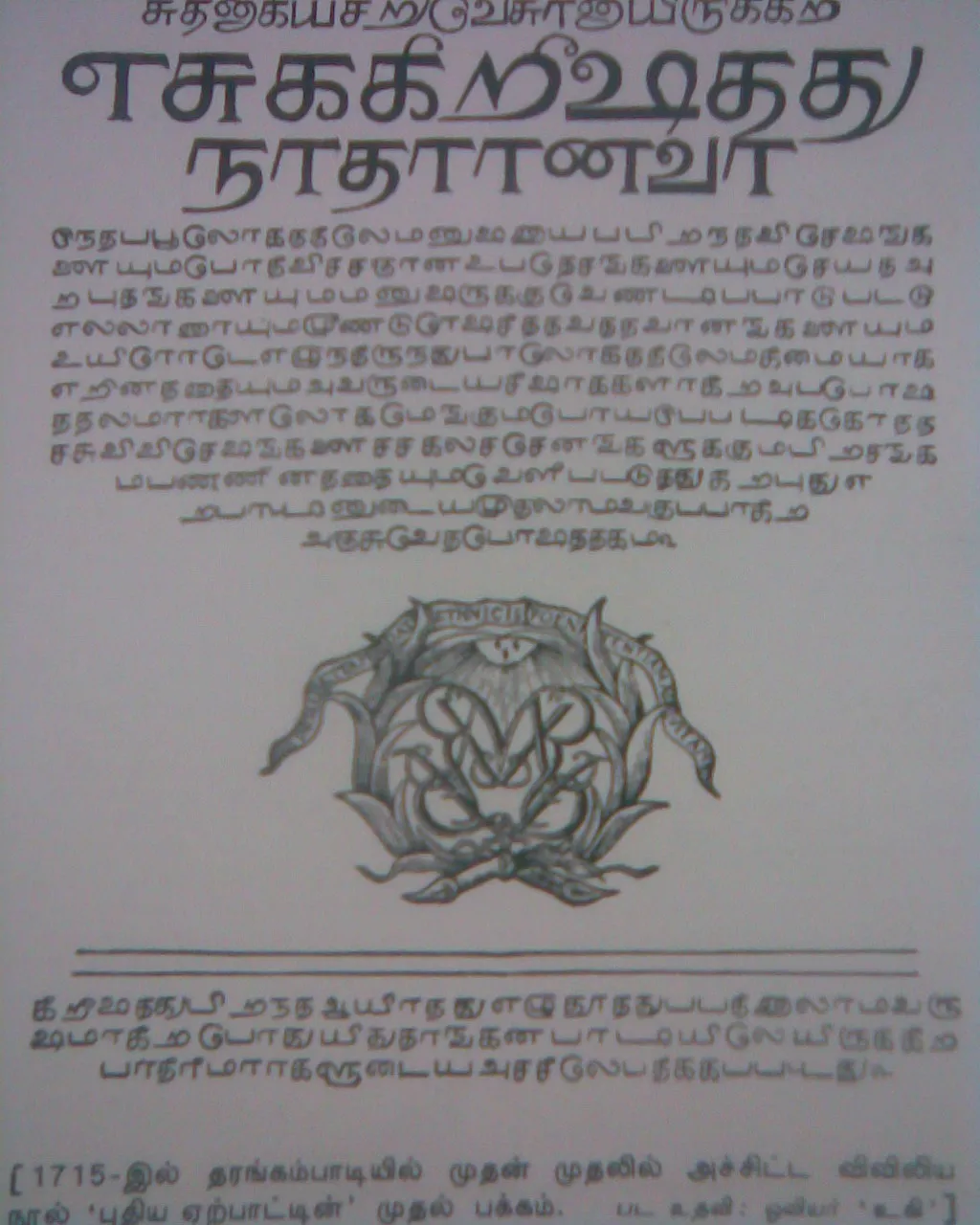
This river of print did not stop at Germany's border. Ziegenbalg, chosen through Francke's circle, had arrived at Tranquebar in India in 1706; by 1711 he had finished translating the New Testament into Tamil. In 1712/13 the mission built India's first Protestant printing press, making Tamil the first Indian language ever set in movable type. The Gospels came off the press in 1714, and in 1715 the complete New Testament was published — the first complete printed New Testament in an Indian language.
The conviction that people should read God's word in their own language ran, type by type, from a Halle print shop all the way to the shores of India.
The Same Book
Three hundred years on, the restored historic orphanage still houses a Canstein Bible Center, and the doors of the Marienbibliothek still stand open to the public. The Chinese Bibles in our own hands were not printed in Halle; but the wish that even the poor could afford a Bible first took the shape of a Bible society and type that never came down, right here in this city. Today, a group of Chinese Christians in this same city open the very same book.
People in this line
Sources