The Pendulum of Theology
Three centuries of Halle University: Pietism, rationalism, and a return to the gospel
“What good does it do those who read the Scriptures, if they do not know the Spirit who inspired them?”— Jacob Boehme (translated)
Halle University, opened in 1694, was once a stronghold of Pietism, its theology faculty for a time the largest in Germany; later it turned toward rationalist criticism and set a new intellectual current; later still, one man spent fifty years bringing it back to the gospel. Across the three-hundred-year swing the truth stands firm — regardless of which way scholarly fashion blows.
A Pietist Beginning
On 11 July 1694, Elector Frederick III founded Halle University. Philipp Spener (1635–1705) worked behind the scenes at the Berlin court to bring it about, and Pietism took charge of the theology faculty from the start: Breithaupt became the first professor of theology in October 1691; August Hermann Francke (1663–1727) was appointed on Spener's recommendation, and together with Paul Anton, the three came to be known as the three pillars of Halle Pietism.
The eighteenth-century Halle University ranked alongside Göttingen as one of the two most influential universities in Germany; its theology faculty was the largest in Germany at the time, training some six thousand church workers, and at least sixty of its students set out from here for overseas mission fields.
Driving Out the Philosopher
Pietist zeal had an edge to it as well. In 1723, Pietist theologians led by Joachim Lange pressured the Prussian king into ordering the philosopher Christian Wolff to leave the country within forty-eight hours — the spark was a 1721 lecture in which Wolff had praised Confucius and the rational morality of the Chinese. In 1740, when Frederick the Great took the throne, one of his first acts was to recall Wolff to Halle. The pendulum had already, quietly, begun to swing.
Reason Takes the Stage
The real swing of the pendulum came from within scholarship itself. Baumgarten brought Wolff's philosophy into theology; Semler (1725–1791), who followed him, is called “the father of German rationalism” and was one of the founders of historical-critical biblical scholarship — a school of thought that arose, of all places, out of a stronghold of Pietism. The standard verdict of church history is that Pietism, by undervaluing doctrine, unwittingly paved the way for the liberal theology that followed. It is an irony that falls on Pietism itself.
From 1804 to 1807, Schleiermacher taught at Halle for three years — later generations would call him the father of modern Protestant theology — before the university closed on account of war and he moved on to Berlin.
Fifty Years Back
It was Tholuck who brought the theology faculty back to the gospel. He arrived in Halle in 1826 and taught for more than fifty years, until 1877. A standard-bearer of the revival movement, he was known as “the father of his students”; in 1827, Charles Hodge of Princeton studied in Halle and became his close friend. Halle's theology had, once again, come back to the gospel.
A String of Names
In the nineteenth and twentieth centuries, a string of names still famous today filled Halle's lecture halls: Gesenius taught here from 1810 to 1842, and his Hebrew lexicon remains a standard reference to this day; Kähler spent forty-five years in Halle and in 1892 wrote The So-Called Historical Jesus, which would influence Tillich; Gunkel, the founder of form criticism, taught here from 1920 to 1927 and died in Halle in 1932; Loofs lectured on church history from 1888 to 1926. Later still came Kurt Aland: in Halle from 1947 to 1958, he served as chief editor of the Nestle-Aland Greek New Testament; for resisting the East German regime he was dismissed in 1958 and fled to West Berlin. The pendulum still swings, and the witness still stands.
Two Towns, One Name
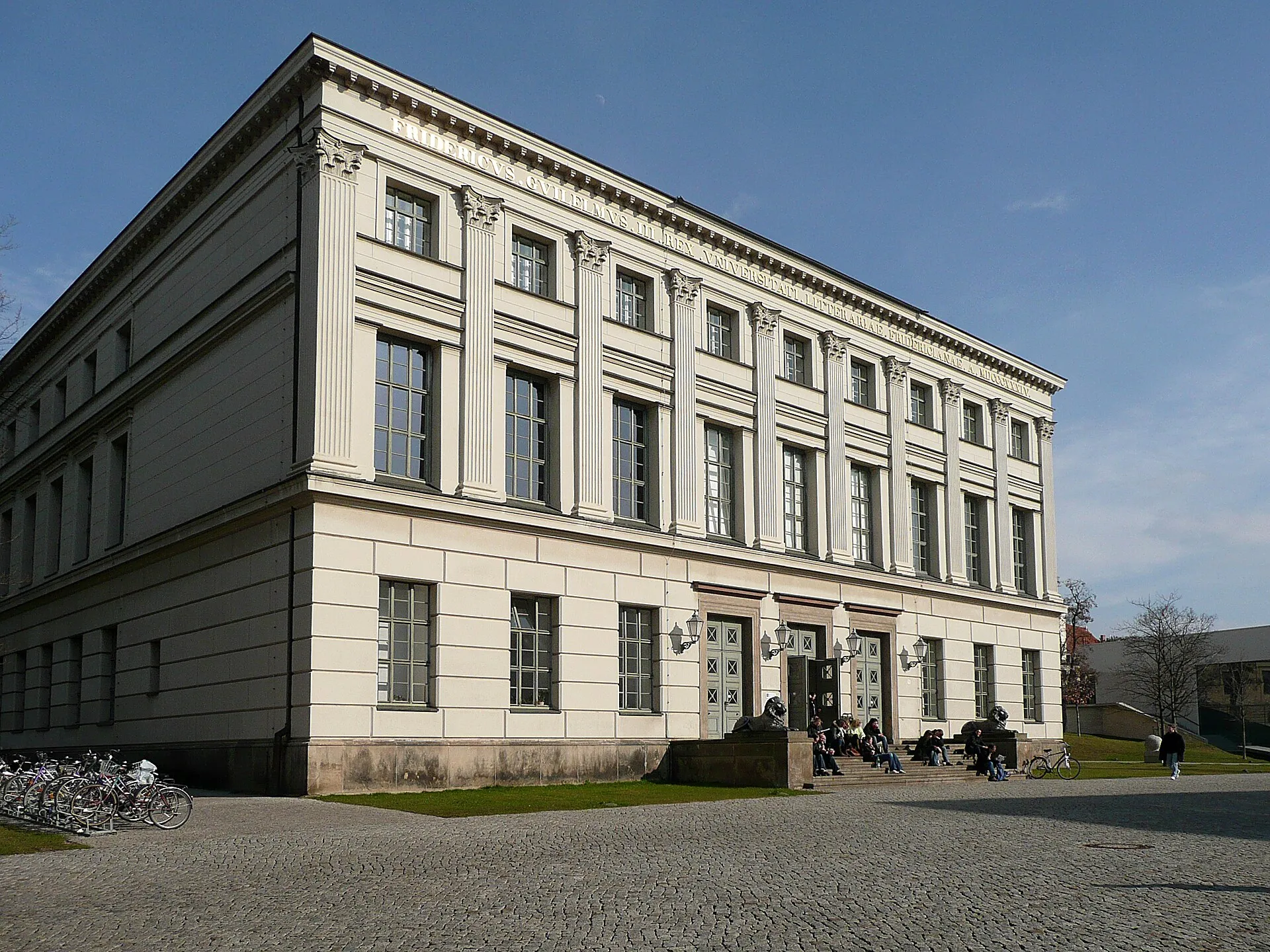
On 12 April 1817, Halle University merged with the University of Wittenberg; from 1933 it took the name Martin Luther University Halle-Wittenberg — Martin Luther's name has been written into Halle's name ever since. Today the university's theology faculty is still active, and the Francke Foundations house a center for Pietism studies. Looking back over these three centuries — from Pietism to rationalism and back to the gospel — the swing of one university's pendulum bears witness to this: truth does not depend on scholarship to sustain it, and the direction of the lecture hall cannot decide what God will do. There is also a circle worth noting: in 1723, Halle drove out a philosopher for a lecture praising the Chinese; three hundred years later, a company of Chinese Christians worships, in Chinese, in that same city. The door has stayed open all along.
People in this line
Sources