Witness Under Persecution
Under two totalitarian regimes, the church did not disappear
The twentieth century set the church in Halle two hard tests: first the Third Reich, then the long years of East Germany. Preaching was banned, pastors were arrested, and the blueprints for the new town left, deliberately, no room for a church. But both regimes have passed, and the church remains. On the night of 9 October 1989, this city paid a price in blood for that.
Refusing to Fall Silent
After 1933, the Third Reich demanded that the church bow its head; the part of the German church that refused rose up and confessed its faith, calling itself the Confessing Church. Wolfgang Staemmler (1889–1945), General Superintendent of Halle, was the leader of the Confessing Church in the Church Province of Saxony: from 1934 he was placed under a preaching ban — for a minister, this amounted almost to being silenced outright — and beyond the ban came arrest after arrest. Yet the voice of confession was not stopped: in 1937, the second session of the Confessing Church's Fourth National Confessing Synod convened in Halle and adopted a declaration on the Lord's Supper. His pulpit was sealed, but the church went on speaking.
Outside the Plan
After the war, another regime took over. East Germany planned a socialist new town for Halle, Halle-Neustadt, and its blueprints deliberately left no room for a single church — as though a city could plan God out of existence. But the old Passendorf church (Passendorfer Kirche, built 1720–23), against the planners' intent, became the new town's church; young people found in its “open work” program a free space of their own — in years when everything was arranged for them, here they could question, speak, and breathe. However carefully the blueprints were drawn, they could not plan away the human heart.
The Ninth of October
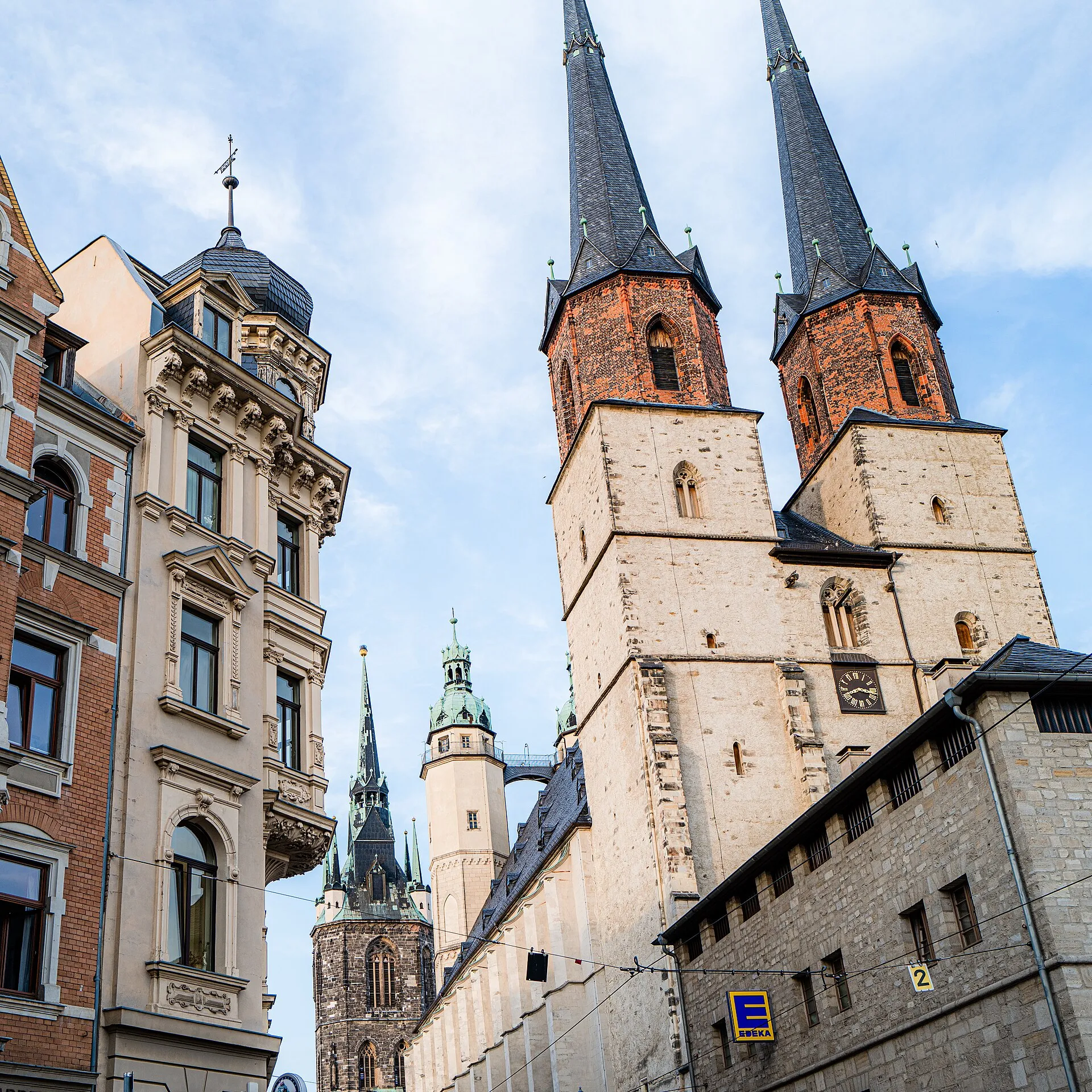
The Marktkirche had held its “Peace Decade” prayers every year since 1981 — this city had already been praying for eight years before the Wall fell. On 9 October 1989, the peace prayers in the church and the gathering in the market square were broken up with batons and police dogs, and 41 people were arrested. That same night, the gathering in Leipzig ended peacefully; Halle paid in blood. A month later, the Berlin Wall fell.
More than four hundred years earlier, the first Protestant sermon in Halle had rung out from this same church; in 1989, the prayers for peace rose from it as well.
The Map Today
Both totalitarian regimes are now history, and the church remains. Today the Halle church district (EKM) numbers about 26,000 Protestants across 65 congregations; the Catholic Church, which returned in 1717, grew after the war with the influx of Germans expelled from the east; Reformed worship has continued at the Cathedral without interruption since 1688; and the city is also home to free churches such as the Baptists, and congregations of various immigrant communities. On this map, a new line has been added in our own time: the Chinese Christian Fellowship in Halle.
That “open door which no man can shut” — Halle's twentieth century bore witness to it: the ban was tried, the blueprint was tried, the baton was tried — and still the door did not close. Today, the worship behind that door is offered in Chinese as well.
People in this line
Sources